
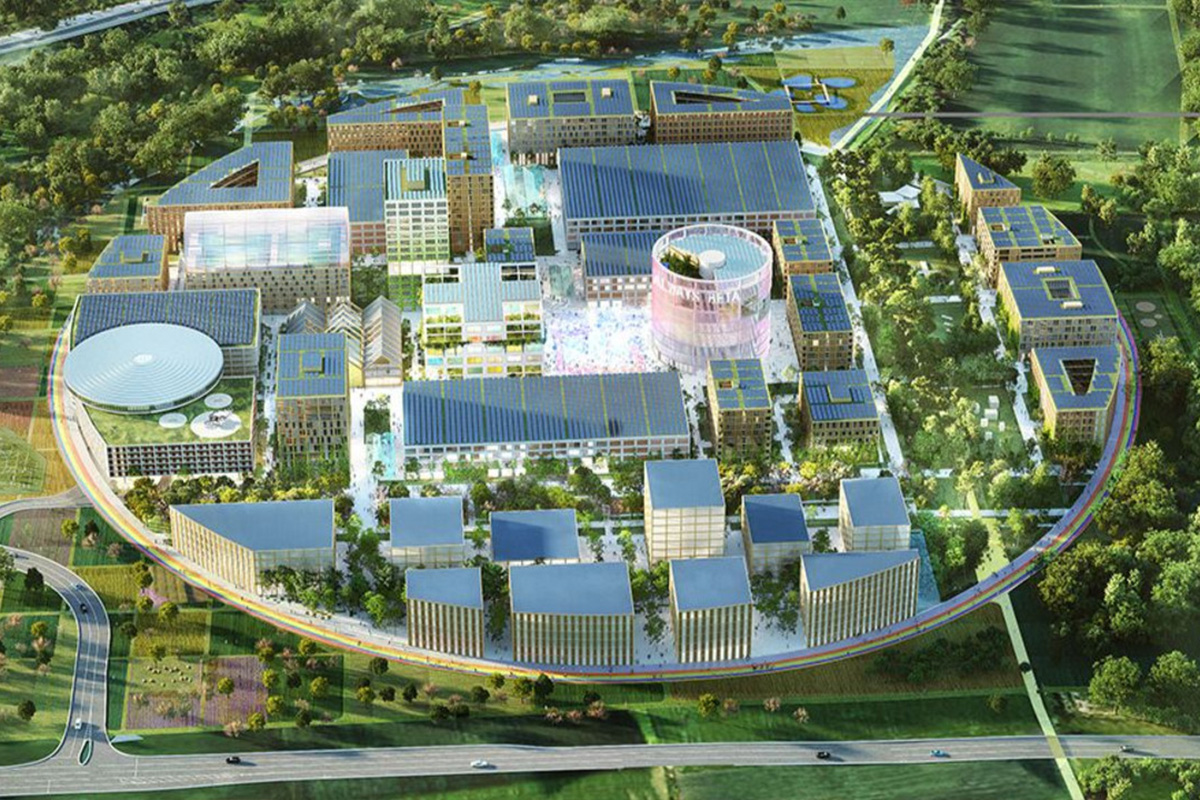

We're based in Talheim, just a few kilometers from Heilbronn — the city where the Innovation Park Artificial Intelligence (IPAI) is being built, one of the largest AI hubs in Europe, backed by the Dieter Schwarz Foundation, the Schwarz Group, the City of Heilbronn, and the state of Baden-Württemberg. As a company from the immediate neighborhood, we have an opinion on it. Here it is, unfiltered.
A European, a German counterweight to American cloud and AI providers — we consider that absolutely necessary, not a nice-to-have. The partnership with Aleph Alpha and the build-out of sovereign cloud infrastructure strike us as exactly the right approach. Anyone who takes digital sovereignty seriously can't get around this kind of investment.
Here's where we're skeptical. The gap to the major American — and by now Chinese — AI providers is enormous, and European data protection standards, as right and important as they are, don't exactly make it easier to build a genuinely competitive counterweight quickly.
What's interesting: much of the foundational research behind what counts as modern AI today actually came out of Germany. Jürgen Schmidhuber laid key building blocks at TU Munich in 1990–91 — an early transformer variant, generative adversarial networks, pre-training for deep learning. Elon Musk once wrote on X: "Schmidhuber invented everything." The irony: the foundations were there. Market leadership emerged elsewhere. That's exactly the gap between research and commercialization we keep coming back to when we look at IPAI — can we actually turn good research into market-ready products this time, before the others' lead becomes unbridgeable?
We recently attended the IPAI summer festival ourselves — out of genuine interest, not obligation. The event was impressively well organized: hammocks, show acts, an atmosphere nobody had cut any corners on. Content-wise, though, our impression was mixed. What stood out to us were mostly the usual big names — Audi and similar corporations — but not much that stuck with us as concrete innovation. The stage also featured well-known faces from television and entertainment, which made it feel more like a well-produced company party than a forum for serious technical or scientific engagement with AI.
In fairness: we were there on a Sunday evening and may well have missed the more substantive parts of the program. This isn't meant as a final verdict, just an honest impression from that one evening.
We're glad IPAI exists, and we're rooting for it to actually become a European counterweight. Whether there's enough time left for that, we don't know — but we'd like to see the substance behind the impressive setup become more visible, the kind a project of this scale actually needs. As neighbors, we're watching with a mix of hope and healthy skepticism.
Get in touch for access or support.
Request a personalized showcase of leo.live, or get your copy of Magazine 2026. Both are free, and neither commits you to anything.