
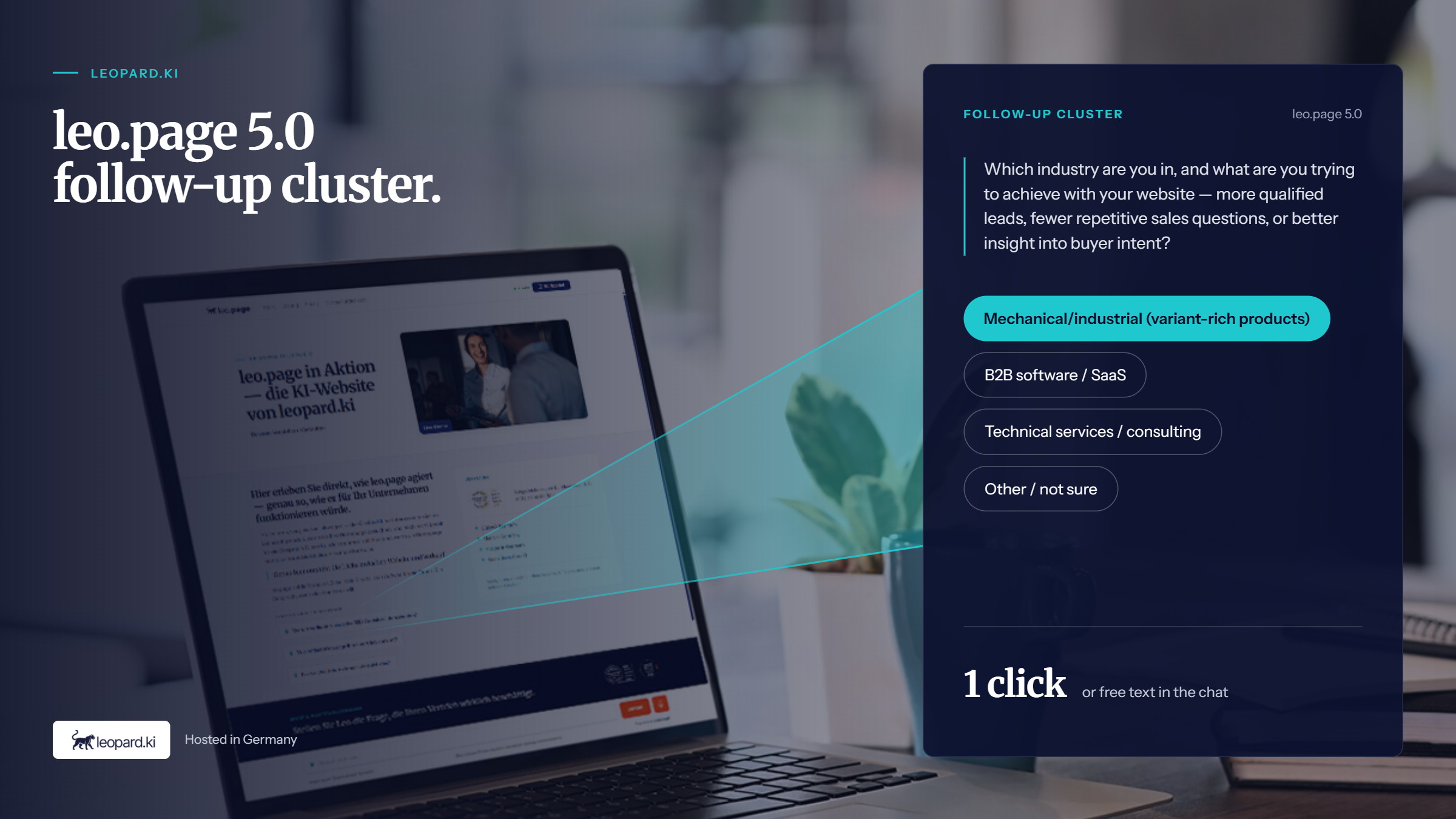

Anyone who uses ChatGPT, Claude, or Grok knows the pattern: before the AI answers, it sometimes asks a follow-up question. Often it offers a few possible answers to choose from right away. That costs one click — and makes sure the answer actually fits the question.
leo.page works the same way. When a visitor on your website asks an open question, leo.page doesn't answer immediately. It first asks about the situation — for example: is this about explanation-intensive products with many variants, about services, or about software? The visitor picks the fitting answer with one click. Anyone who prefers can also type their own.
Our analyses show that many visitors don't yet quite know how to interact with an AI. For people who work with ChatGPT or Grok every day, an AI advisor on a website is nothing special. But many decision-makers, buyers, and engineers in mid-sized companies don't use tools like these regularly yet. For them, a website that answers is something new. And faced with an empty input field, one question comes up quickly: what am I actually supposed to type in here?
The suggested answers remove that uncertainty. They show what kind of answer is expected and make the first step as simple as clicking a button. Nobody has to learn how to ask an AI questions first.
- More conversations: Visitors who would otherwise have hesitated now start a conversation.
- Better advice: leo.page knows the visitor's situation early and can give a targeted answer instead of a generic one.
- Clear signals: Every choice shows you which needs visitors actually bring to your website.-
- Honest assessment: If something isn't a fit, leo.page says so openly. That saves time on both sides.
A good salesperson first asks what it's about — and only then recommends a solution. leo.page does exactly the same, just around the clock and directly on your website.
Get in touch for access or support.
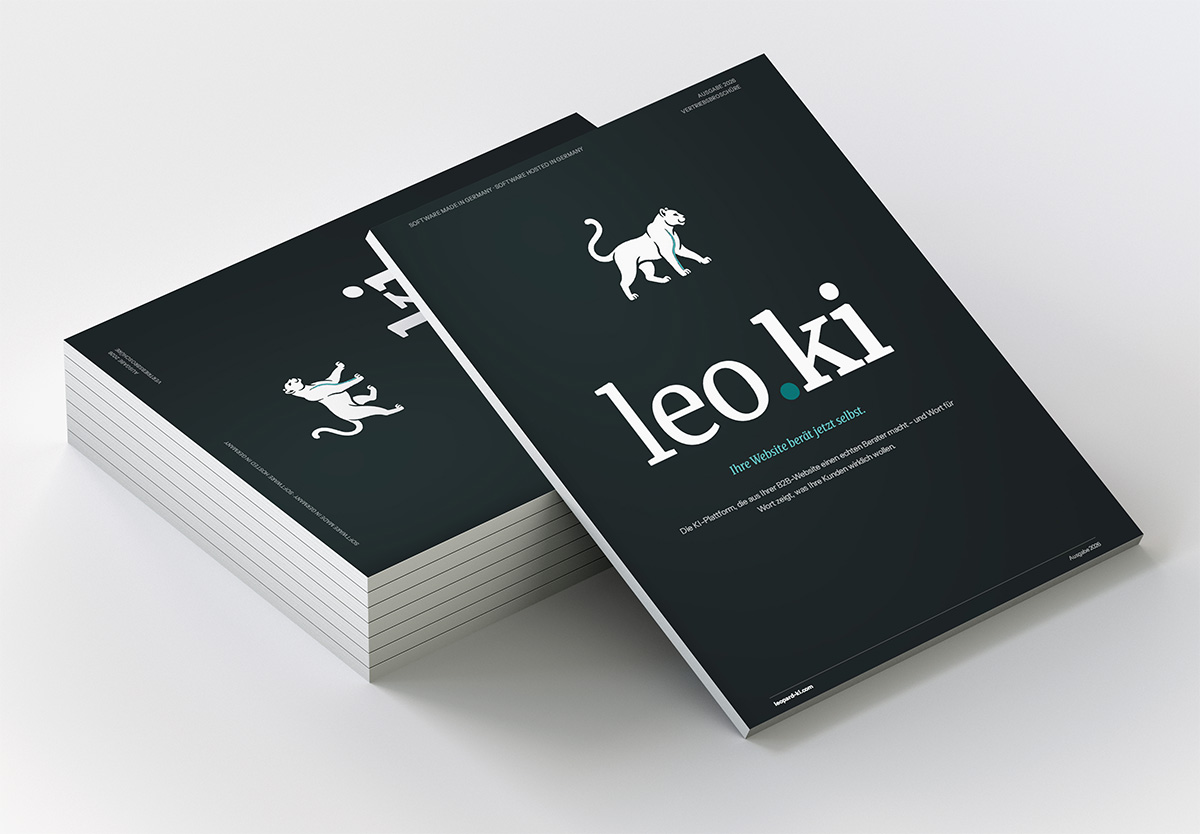
Request a personalized showcase of leo.live, or get your copy of Magazine 2026. Both are free, and neither commits you to anything.